
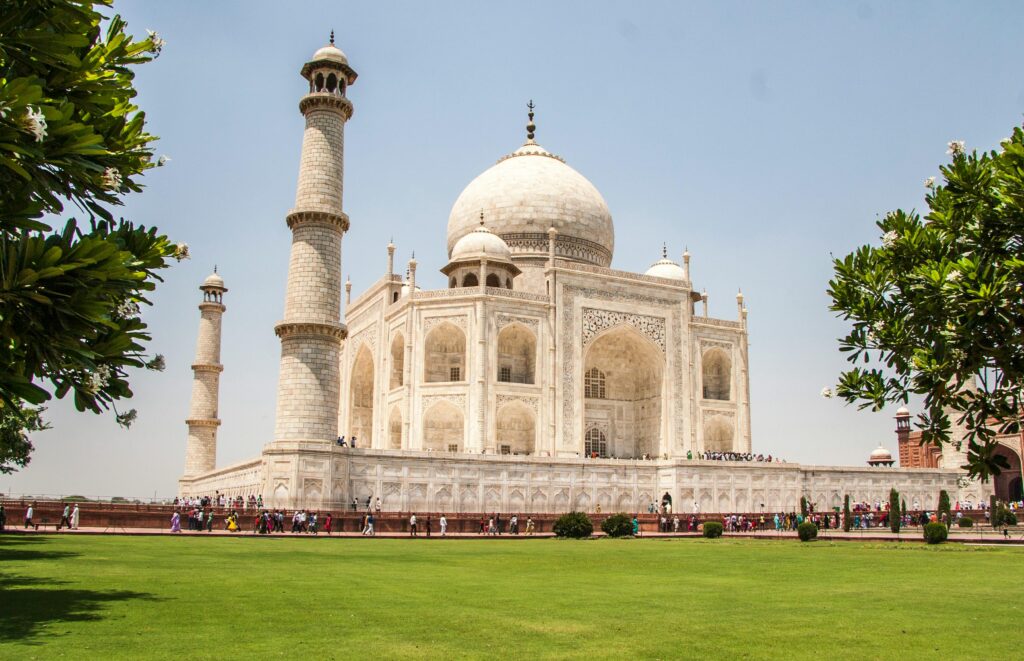
The Taj Mahal, an iconic monument located in Agra, India, is one of the most famous landmarks in the world. Often regarded as a symbol of eternal love, this white marble mausoleum has captivated the hearts of millions of visitors and has been recognized as one of the Seven Wonders of the World. 🌍✨
A Love Story Etched in Stone ❤️
The Taj Mahal was commissioned by the Mughal Emperor Shah Jahan in memory of his beloved wife, Mumtaz Mahal. Mumtaz, the emperor’s third wife, died during childbirth in 1631, leaving Shah Jahan grief-stricken. 😢 Determined to honor her memory, Shah Jahan began construction of the Taj Mahal in 1632, a project that would take over 20 years to complete.
The emperor envisioned the Taj Mahal as a symbol of his undying love for Mumtaz Mahal. Its grand design was intended to be a reflection of paradise on Earth, with intricate details and stunning beauty. The white marble structure stands as a poignant reminder of the emperor’s devotion, making it not just an architectural marvel but also a powerful symbol of love. 💍
The Architecture and Design 🏛️
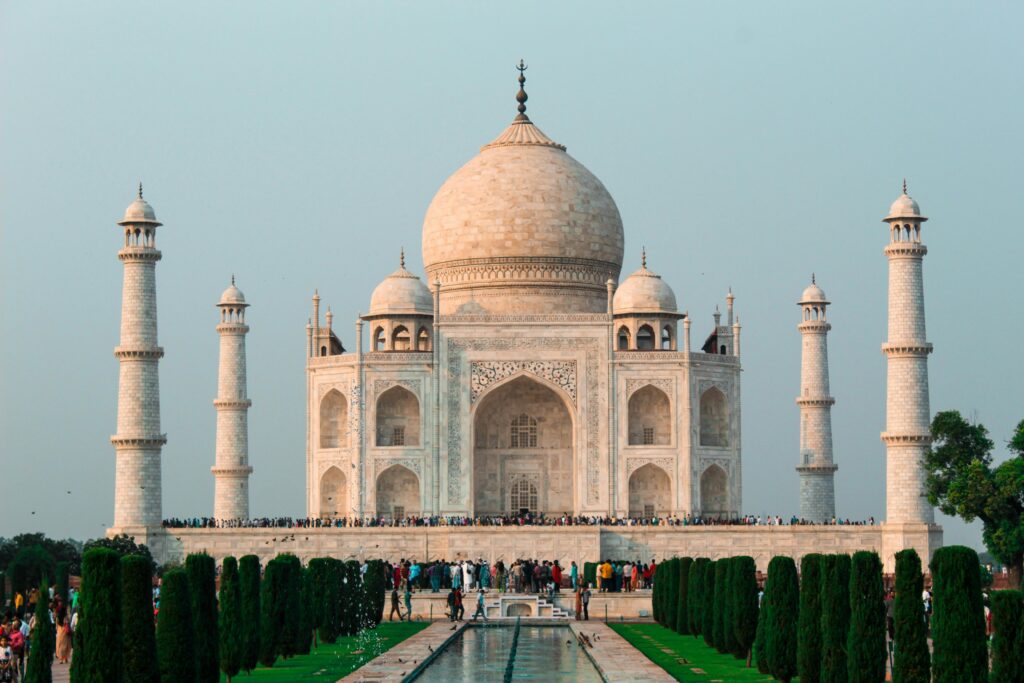
The Taj Mahal blends various architectural styles, including Persian, Ottoman Turkish, and Indian influences. The central dome is the most prominent feature, rising to a height of 35 meters (115 feet). It is surrounded by four minarets, adding to the structure’s symmetry and grandeur. 🏰 The intricate carvings, calligraphy, and inlaid gemstones on the marble walls are a testament to the craftsmanship of the artisans who worked tirelessly on the monument.
The mausoleum is set amidst beautifully landscaped gardens, with pathways, fountains, and reflective pools that enhance its elegance. 🌳💦 The marble used in its construction is of the highest quality, and the building changes color throughout the day. It appears soft pinkish in the early morning, dazzling white at noon, and golden under the moonlight, making it a mesmerizing sight at any time. 🌅🌕
Cultural and Historical Significance 📚
The Taj Mahal holds deep cultural and historical importance for India. It represents the height of Mughal architecture and showcases the artistic and engineering expertise of the era. It also serves as a reminder of India’s rich history and the intricate blend of different cultures and traditions that have shaped its architectural heritage. 🏛️🌍
In 1983, the Taj Mahal was designated as a UNESCO World Heritage Site, acknowledging its universal cultural significance. It attracts millions of tourists each year, contributing to India’s cultural tourism industry. 🌏📸
Knowledge Center
Latest Articles & Blog
-
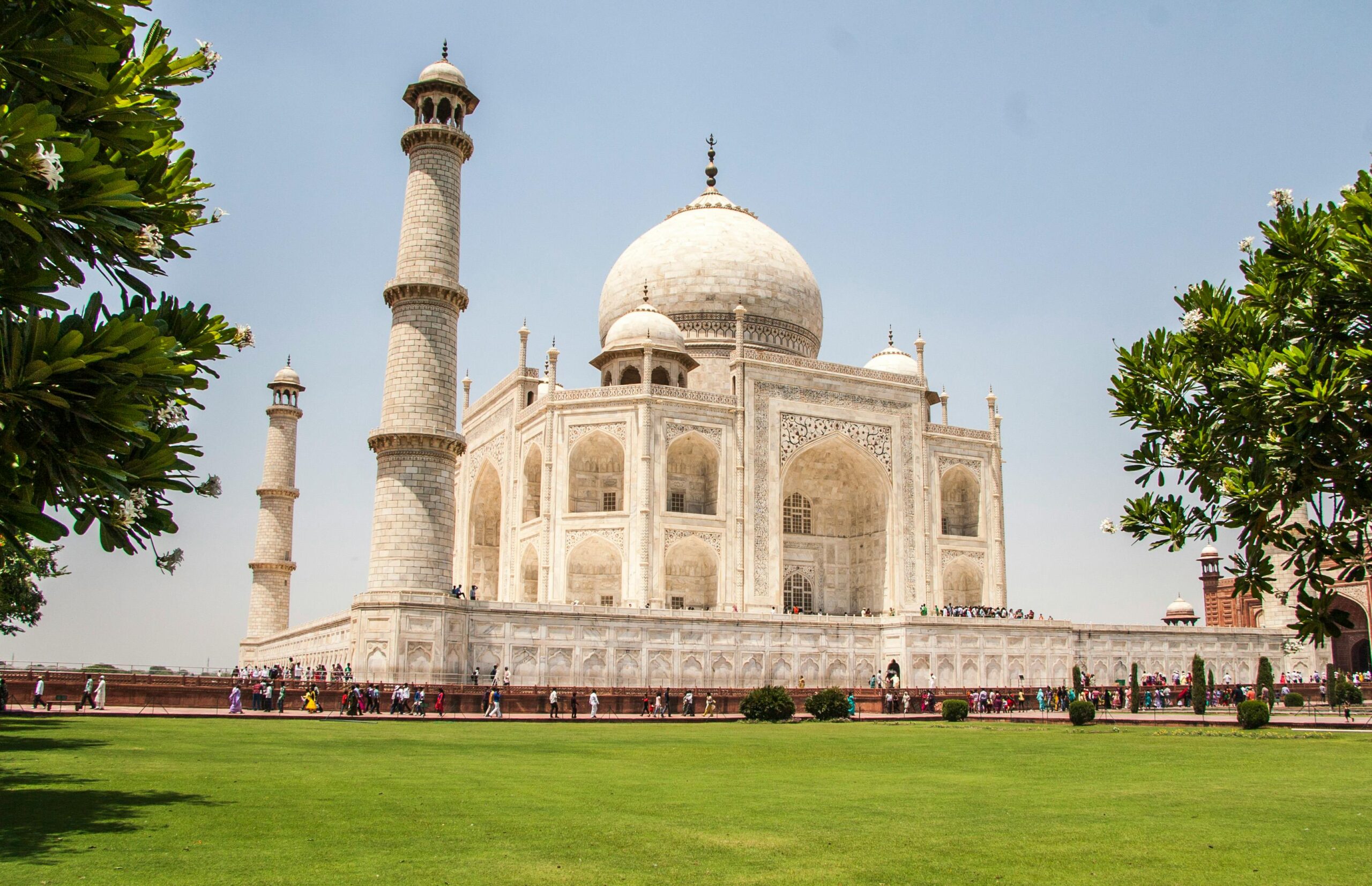
The Taj Mahal: A Timeless Symbol of Love and Architecture 🏰💖
The Taj Mahal, an iconic monument located in Agra, India, is one of the most famous landmarks in the world. Often regarded as a symbol…
-

Kashmir: The Crown Jewel of India 🌍✨
Nestled in the northernmost part of India, Kashmir is often referred to as “Paradise on Earth.” Renowned for its breathtaking landscapes, vibrant culture, and historical…
-

🌿 Escape to the Serenity of Matheran 🌄
Discover the charm of Matheran, Maharashtra’s tranquil hill station nestled in the lush Western Ghats. 🌳 A pollution-free paradise where vehicles are banned, Matheran promises…